Baby Food Makers for BLW: Steam Without Pureeing
27th Mar•9 min read
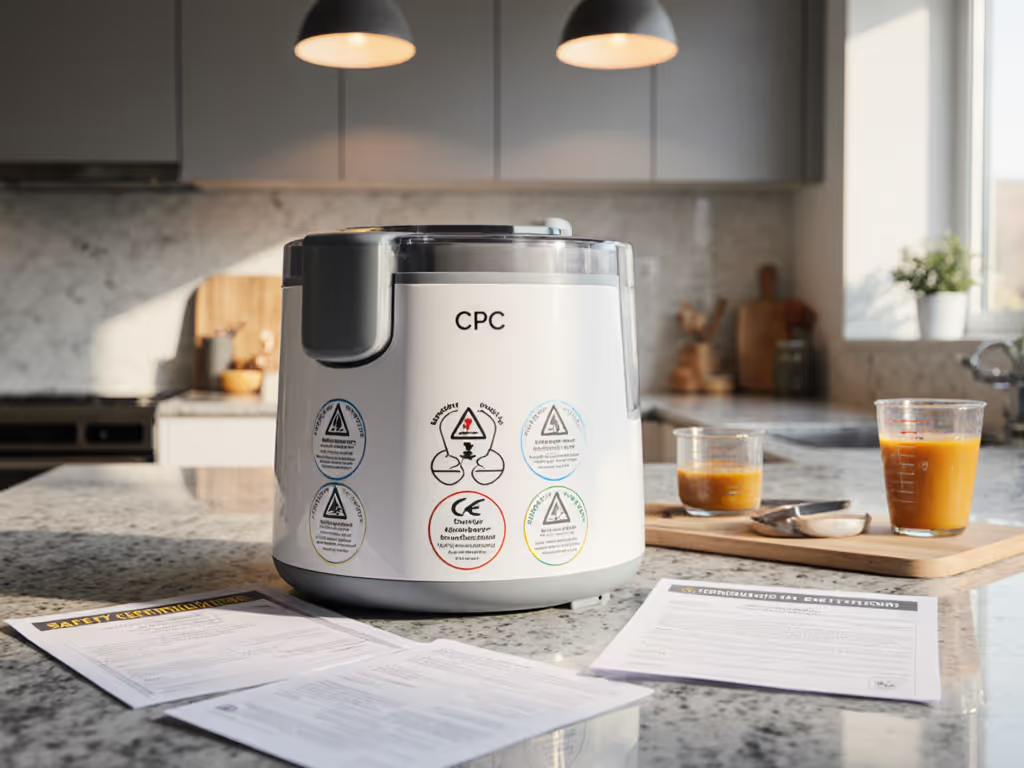
When you're holding a baby food maker for the first time, those little seals and labels can feel like cryptic hieroglyphs, especially when you're already overwhelmed by new-parent fatigue. Understanding baby food appliance certifications and baby food maker safety certifications shouldn't require a law degree or chemistry PhD. Let's translate these markings into practical safety checkpoints you can verify yourself, because Safety is clarity: know what touches the food, how it heats, and how it cleans.
As someone who's tested kitchen appliances after a friend's baby reacted to detergent residue (not the food), I've learned that safety often lives in what doesn't get advertised. That experience reshaped my testing protocols. I now swab gaskets after 'dishwasher safe' cycles and investigate what "BPA-free" really means when plastics heat. For how U.S. and EU certifications differ on materials, heat, and documentation, see our EU vs US safety standards. Today we're cutting through certification noise with plain English explanations that align with your actual kitchen realities.
Don't just look for "BPA-free" claims, check for:
CPC (Children's Product Certificate): Required by CPSC for all baby products. This isn't a logo on the box, it is documentation proving third-party lab testing for lead, phthalates, and other hazards. Ask retailers for the CPC if it's not online; manufacturers must provide it upon request (CPSC.gov, 2025).
Material-specific certifications: Look for NSF International or FDA food-contact marks beyond basic BPA claims. These verify safety under actual use conditions, not just room temperature. I've found appliances labeled "BPA-free" that leached other plasticizers when heated to steam-cooking temperatures.
A quick verification checklist:
✅ Check CPC documentation exists (required by law) ✅ Confirm material certifications specify heat tolerance ✅ Verify gaskets/seals have independent food-safety testing ✅ Document dishwasher safety claims with post-cycle swab tests
Let's decode common marks with practical relevance:
Meaning: Every textile component (silicone seals, fabric parts) tested for 100+ harmful substances.
Why it matters: Critical for steam-baby food makers with fabric-like filters. But note: doesn't cover hard plastic components. A recent industry report found 32% of 'OEKO-TEX certified' appliances lacked full-system testing for plastic parts.
Meaning: Low VOC emissions verified by UL Environment.
Why it matters: Relevant for appliances that sit on countertops for hours after use. However: only matters for new appliances (emissions drop after initial use). Don't prioritize this over food-contact certifications for daily-use items.
Meaning: Tests finished products for heavy metals and contaminants after manufacturing.
Why it matters: This is where I've found shocking gaps, appliances passing regulatory tests but failing under real-world use conditions. Gerber's Clean Label Project certification, for instance, tests for plasticizers like BPS that aren't covered by standard CPSIA requirements.
"Dishwasher safe" claims are notoriously unreliable for baby appliances. Here's what to verify:
Drying verification: Plastic components that don't dry completely within 2 hours become mold risk zones. Check if certifications include humidity chamber testing.
Seam integrity: Ask if the manufacturer tests for food particle entrapment in crevices. I've seen appliances pass safety tests but fail basic rice-grain entrapment checks. For evidence-based hygiene risks and thresholds, review our lab-tested safety study.
Clean is a safety feature. If parts don't dry completely within 2 hours, they're creating new hazards.
AB 899 (effective 2024) requires baby food manufacturers to test for arsenic, cadmium, lead, and mercury, but it doesn't apply to appliances. However, savvy brands like Baby Brezza now voluntarily disclose material testing to these standards. When researching appliances, look for:
Forget marketing fluff, here's what actually matters for baby food makers:
I've walked away from "certified" appliances that couldn't answer these basic questions. Safety isn't about the number of seals on the box, it's about what happens when the appliance is actually used.
Baby food appliance safety isn't about collecting certifications, it is about verifying what matters in your kitchen. When evaluating marks: