Quiet Baby Food Makers: Reflux-Friendly Prep
6th May•9 min read
When baby food safety testing shifts from lab reports to your 400-square-foot kitchen, reality hits hard. I learned this chasing counter space for purees while my baby napped. Lab-tested baby food preparation isn't just about sterile gloves, it's about practical contamination prevention in cramped quarters. Forget fear-mongering; let's dissect what actually matters for your tiny kitchen workflow, backed by hard data. One tool that replaces three is money in the bank, and it might save your sanity more than your budget.
Recent studies (like the PMC6111046 analysis of 205 infant food samples) revealed bacteria growth in baby purees isn't rare, even in commercial products. Bacillus cereus, a heat-resistant spore former, contaminated 21.9% of samples tested, with some exceeding safe thresholds. But here's the kicker: scientific baby food safety isn't about perfection. It's about smart risk reduction where space and time are luxuries. Below are the only 5 steps worth your square footage, no extra gadgets needed.
A News-Medical study showed 85% of microbes in baby formula come from three common genera, even in "safely" prepared bottles. Crucially: exclusive breastfeeding delivers 10x more bacteria than formula prep, yet it's nature's ideal fuel. The takeaway? Lab-tested baby food preparation proves: no method is sterile. What matters is managing growth. Skip the shame spiral. If store-bought saves your nap time, safe food storage times are your real guardrail, not your grocery receipt. When you're ready to switch, see our store-bought to homemade guide. My rule: Batch purees only when I have 20 uninterrupted minutes. Otherwise, I grab a pouch and move on. Buy once, cry never applies to mental load too.
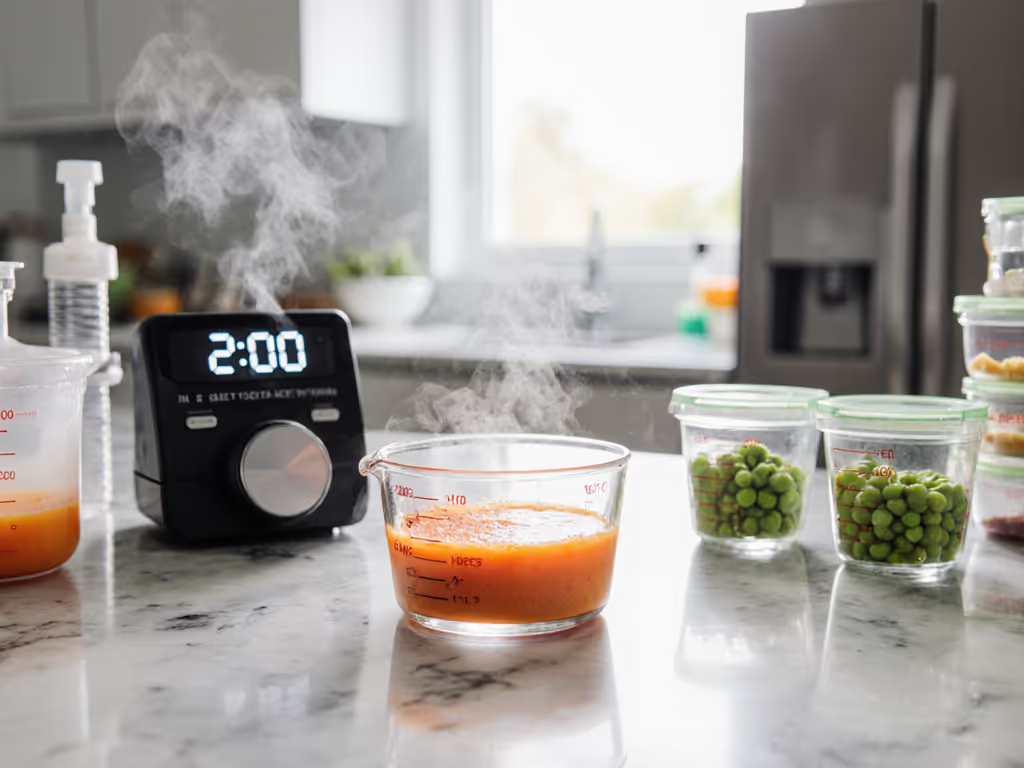
FDA guidelines say discard formula/purees left out >2 hours, but labs reveal why. In PMC8400337 research, bacteria growth in baby purees exploded after 120 minutes at room temperature. One study calculated infants could ingest 10<sup>6</sup> CFU of bacteria daily from contaminated formula, still safe if microbes are non-pathogenic, but risky with B. cereus.
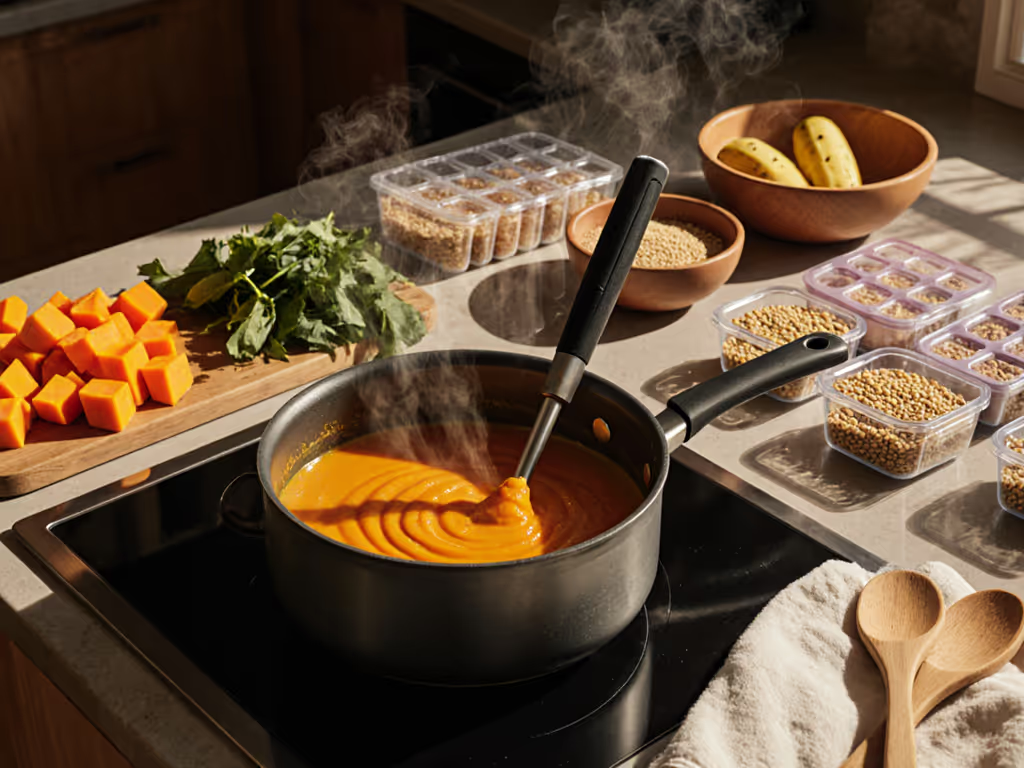
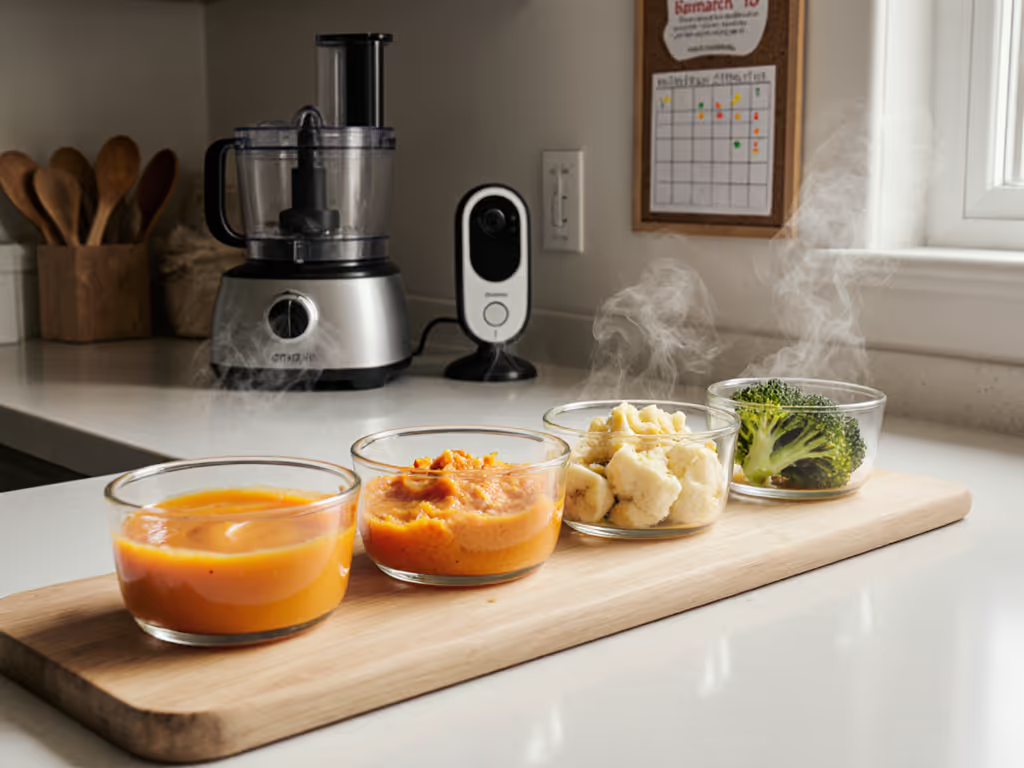
Small-space hack: I prep purees during naps using a $15 rice cooker (steaming) + stick blender (blending). Not sure which setup fits your home? Compare a handheld blender vs baby food maker for noise, cost, and workflow. Transfer cooled batches immediately into labeled ice cube trays. Why ice cubes? They freeze faster than jars, minimizing time in the "danger zone." Cleanup? One cup. No dishwasher, no counter clutter.
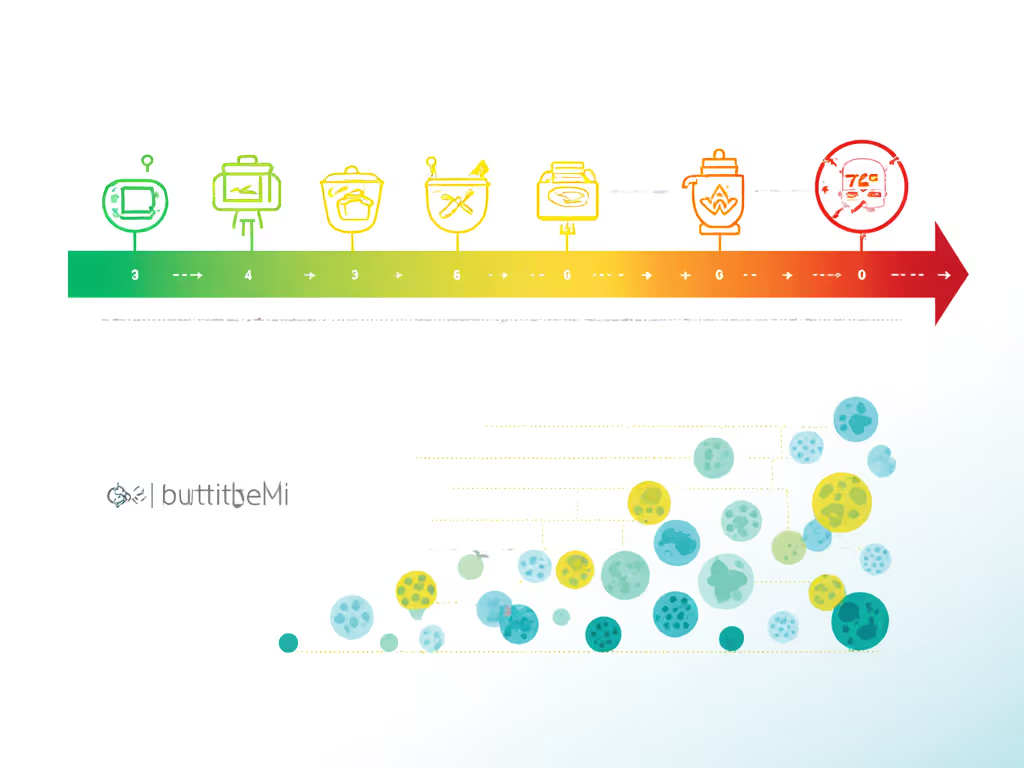
Contrary to Pinterest myths, safe food storage times for homemade purees top out at 48 hours refrigerated. Study data shows B. cereus spores survive cooking and multiply rapidly between 40°F to 140°F. After 72 hours? Bacterial counts can hit unsafe levels, even in cold storage.
Skip this: Don't buy "baby food fridges." Your main fridge works if you:
Price-to-performance math: A $3 thermometer beats a $50 "baby" appliance. Verify your fridge is <= 40°F. For portioning, labeling, and freezer workflow, see our baby food storage guide. If not, bacteria win.
Cross-contamination happens when food touches multiple surfaces. A Scirp study found contamination prevention methods are most effective when reducing hand/tool contact. Every transfer (steamer basket -> bowl -> blender) adds risk. That's where multi-function tools earn their space.
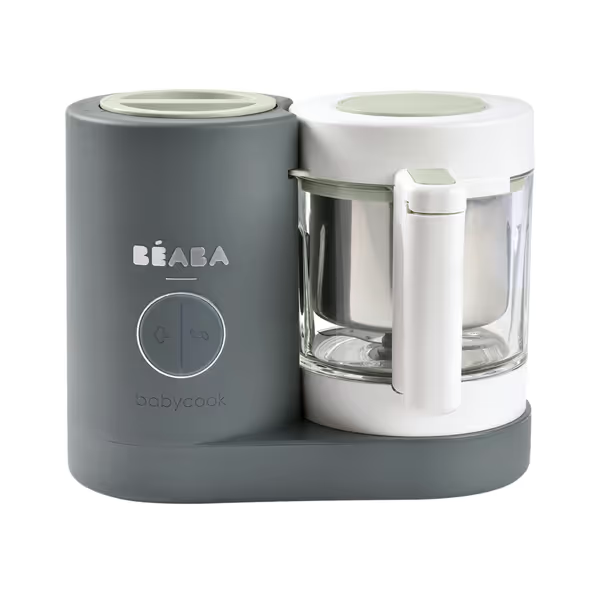
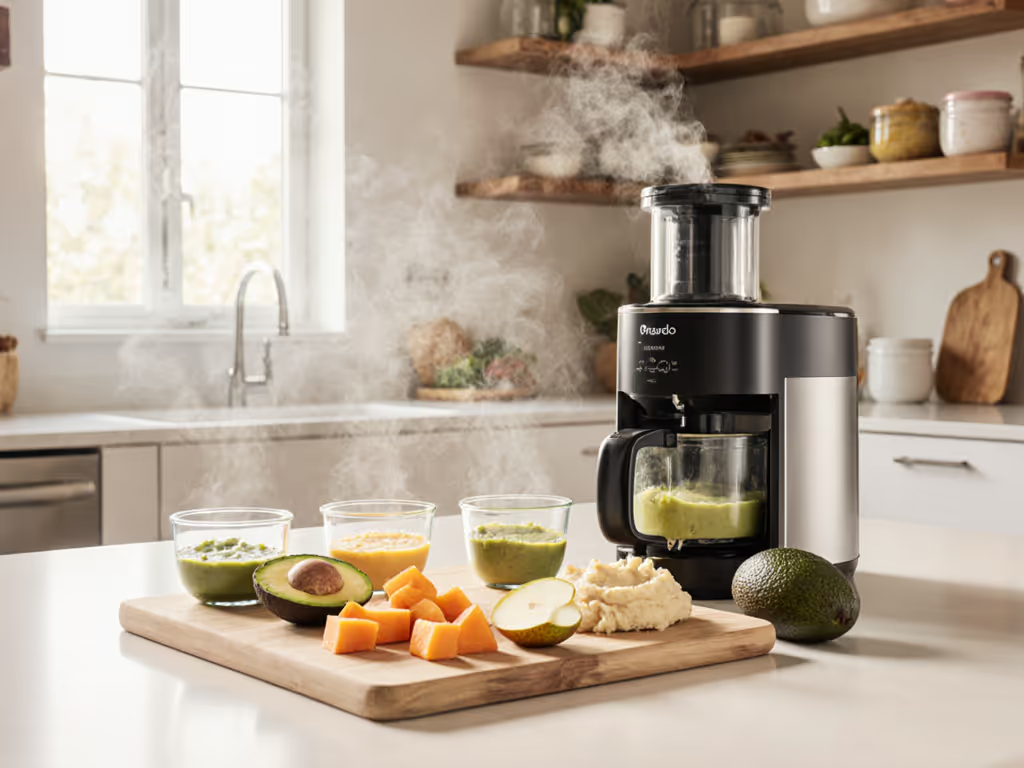
The BEABA Babycook Neo's steam-blend system (all-in-one bowl) cuts transfer points by 67% vs. separate pots + blenders. I'm not shilling gear, I'm stating physics: Fewer surfaces = fewer bacteria hideouts. For tight kitchens, this isn't luxury; it's price-to-performance math. If you buy one tool, make it a cleanable steam-blender. Dishwasher-safe parts are non-negotiable. Skip plastic-heavy models with crevices, stainless steel steam baskets clean faster.
Many parents use cool water for powder formula to "preserve nutrients." Bad idea. Research (News-Medical, 2025) shows bacteria growth in baby purees drops 90% when prep uses >= 140°F water, which kills B. cereus spores. Room-temp water? Same contamination as 70°C in some brands.
Tiny kitchen fix: Keep a thermometer ($8) next to your kettle. Heat water to 160°F, cool 5 mins (to ~120°F), then mix. Why 120°F? Safe for plastic storage but hot enough to sterilize. Do this while steaming veggies, no extra steps. Your time investment: 90 seconds. Your risk reduction: lab-confirmed.
Baby food safety testing boils down to two things in cramped spaces: minimizing time in danger zones and reducing transfer surfaces. You don't need a sterile lab, just smart habits. Ditch the guilt, embrace the 2-hour rule, and invest in one multi-tasker that replaces your steamer, blender, and storage station. My stick blender + rice cooker setup cost $40. It's survived 18 months because it's simple. In tiny kitchens, Buy once, cry never means choosing tools that vanish into drawers, not dominate counters. Prioritize dishwasher-safe builds, stainless steel parts, and zero crevices. Your baby's health isn't about premium gear. It's about price-to-performance math that fits your reality. Now go protect that nap time, I'll be batch-freezing sweet potatoes in my rice cooker.