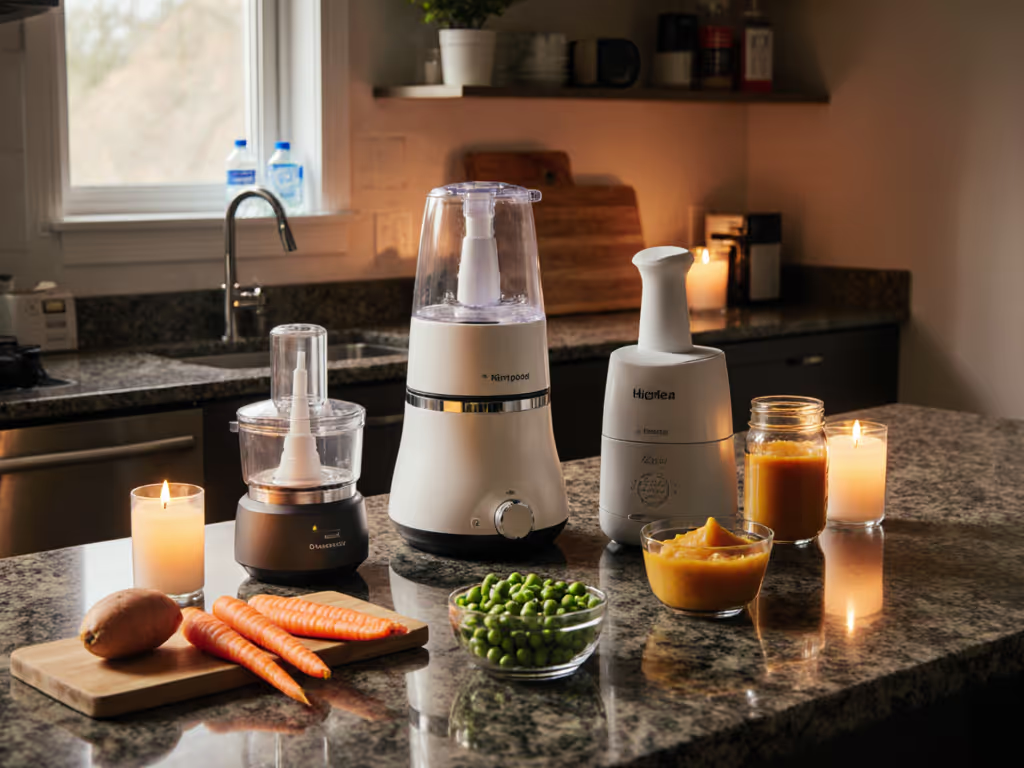
Best Emergency Preparedness Baby Food Makers Compared
14th Jun•14 min read
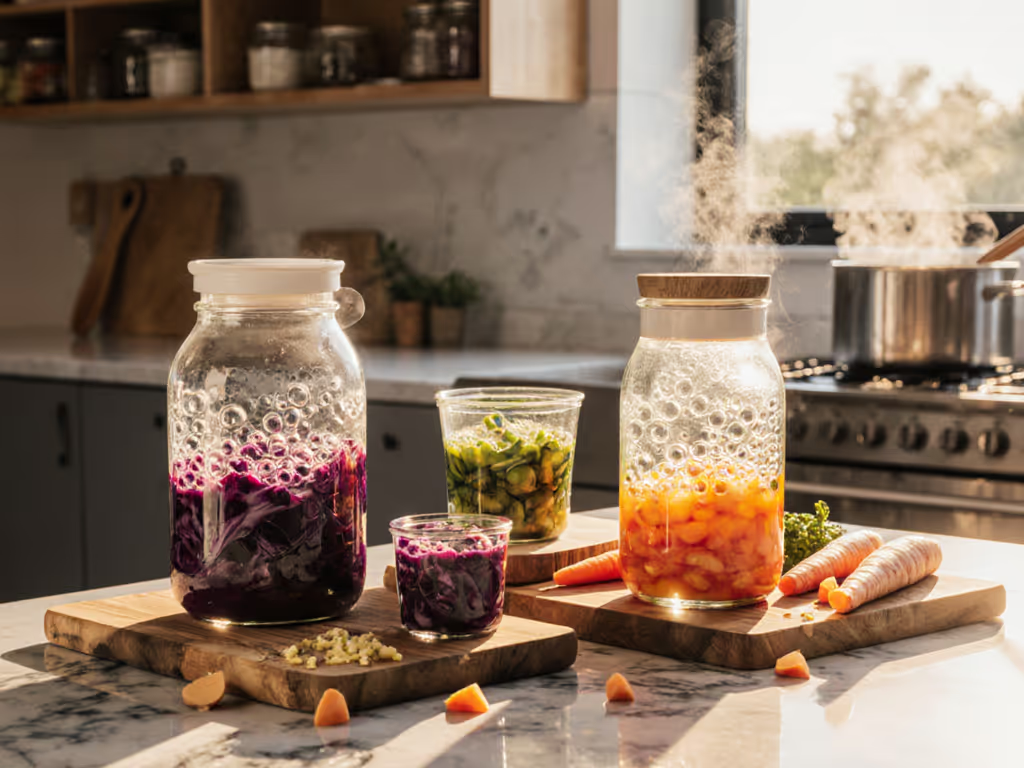
Fermented baby food makers and equipment for probiotic baby food preparation are getting more attention as parents explore gut-healthy options for their infants. But here's the hard truth: most fermented baby food gear falls into two camps: overpriced specialty devices that do one thing, or multi-use kitchen tools that happen to excel at fermentation tasks. This article cuts through the noise to show you which equipment actually earns its counter space, which you can skip, and how to think about the price-to-performance math before you buy.
There's solid science behind the interest in fermented dairy products for infants. Research demonstrates that fermented foods can function as precision modulators of gut microbiota, which is why pediatricians and parents alike are paying attention to probiotic-rich baby food options. The appeal is straightforward: fermentation can enhance the nutritional profile of foods and introduce beneficial microorganisms that support digestive health during a critical developmental window.
But here's where equipment enters the conversation. If you're considering making fermented foods at home for your baby (whether yogurt preparation for infants or fermented cereal-based preparations), you'll want gear that makes the process reliable, repeatable, and actually worth the effort.
Before we talk equipment, let's address the elephant in the room. While fermented dairy and foods offer benefits, some microorganisms can release toxic compounds. The most concerning are biogenic amines and aflatoxins, which can develop under improper fermentation conditions. This isn't a reason to avoid homemade fermented foods; it's a reason to use equipment and processes that maintain consistent temperature, timing, and hygiene. For step-by-step hygiene and maintenance, see our baby food maker cleaning guide. The research community acknowledges there's still a need for more controlled clinical trials in this area, so consistency and control matter.
Translation: Your equipment choice directly affects safety. You're not just buying convenience; you're buying precision.
When you're making fermented baby food at home, equipment typically handles three tasks:
Here's where the small-space hacks matter: space is a budget line. If counter space is tight, these space-saving baby food makers were tested in small kitchens. In apartments or galley kitchens, three separate appliances (steamer, yogurt maker, food mill) can consume more real estate than most families have. So the first question isn't "What's the best fermented baby food maker?" It's "What single tool or two-tool combo replaces three?"
I learned this in my 400-square-foot place when I batch-cooked purees in a rice cooker, then used a stick blender to reach the right texture while the baby slept. One tool that replaces three is money in the bank, and it meant cleanup was literally one cup to rinse and one blending pitcher. The result: I actually did the prep instead of letting the appliance guilt-sit on the counter.
When evaluating gut-healthy baby food equipment, ask these questions:
Look for equipment with a steaming basket or tray. This covers the prep phase without requiring a separate steamer. Bonus: it's useful long after the puree stage (steaming veggies for toddler finger foods or family meals).
Some slow cookers, instant pots, or dedicated yogurt-making devices hold consistent low heat. This is non-negotiable if you're fermenting. Without temperature control, you're guessing, and with babies, guessing on fermentation conditions is a skip-this flag.
If your equipment doesn't have an immersion blending option or a mechanical blender component, you're back to needing a third tool. Check whether the equipment itself blends, or whether it works seamlessly with a handheld stick blender (which is the ultimate space-saver and one-handed winner for apartment kitchens).
This is non-negotiable for the sleep-protective parent. Equipment that runs above 70 decibels risks waking babies and destroying your afternoon. If a product claims to be quiet, look for verified decibel testing, not marketing speak. Most stick blenders clock around 70-75 dB on high; specialty baby food makers vary wildly. See which models stay quiet at every stage in our nap-safe noise test.
If you can't reliably clean every crevice in under five minutes, the friction cost erases the time savings. Dishwasher-safe parts, minimal assembly, and no seams that trap puree are dealbreakers. This is where multi-use equipment sometimes wins: a stick blender has almost nothing to clean compared to a dedicated food processor with multiple compartments.
Your equipment should transition to toddler sauces, family soups, or quick purees when you don't have time to batch-cook. If it only ferments and then becomes a dust collector, that's not price-to-performance math; that's clutter.
Slow cooker + stick blender combo: A basic slow cooker (you probably already own one) can maintain fermentation temperatures. A stick blender handles the pureeing. Compare pros and cons in our handheld vs baby food maker guide. Total cost: often under $40 if you already have the slow cooker. Trade-off: you'll need to monitor fermentation timing more actively, and there's no built-in steaming setup, so you'll need a separate basket.
Why it works: One tool that replaces three. Cleanup is genuinely fast. Both tools are useful for years across multiple feeding stages and family cooking.
Multi-cooker with steaming capability: An instant pot or similar multi-cooker offers steaming, pressure cooking, slow-cook modes, and some models have yogurt-making functions. Cost: typically $80-150. You still add a stick blender for final pureeing.
Why it works: The steaming functionality is built in, reducing the number of separate purchases. Temperature modes make fermentation less guesswork. Still compact enough for small kitchens.
Skip-this flag: If it requires multiple inserts or has fussy assembly, you'll dread using it during the 2 a.m. feeding panic.
Dedicated fermentation vessel + immersion blender: Some brands make beautiful fermentation jars or crocks (often glass or stainless steel) designed specifically for consistent temperature. These are paired with a high-quality stick blender for pureeing. Cost: $150-300.
Why it works: Temperature precision is built into the design. Glass vessels last decades. You're investing in one tool that replaces multiple single-purpose devices.
Skip-this flag: Aesthetic appeal shouldn't override practicality. If it doesn't fit under your cabinet or requires hand-washing with weird crevices, that's not a win.
This is important: making fermented baby food at home doesn't require equipment guilt. Store-bought probiotic-rich baby food options exist for a reason. When you're ready, here's a store-bought to homemade guide. They are convenient, safe (produced under regulated conditions), and realistic for busy caregivers. The equipment investment makes sense if you're prep-cooking in batches (say, twice a month) and genuinely want to dial in the fermentation process. If you're buying equipment hoping it'll motivate you to ferment daily while juggling sleep deprivation and work, that's not the equipment's fault; it's about realistic expectations for your bandwidth.
The sweet spot: equipment that also works for quick steaming and blending on busy weeks when fermentation isn't happening. That's the true value.
Fermented baby food makers succeed when they replace multiple single-purpose gadgets and integrate into your existing kitchen rhythm, not against it.
If you're in a small space with nap-protection priorities:
If you're serious about daily fermented prep and have the counter/storage space:
If you're uncertain:
The real differentiator isn't brand or price; it's whether the equipment replaces three tools instead of adding a fourth. That's the price-to-performance math that matters in a small kitchen, and it's the only calculation that matters when you're tired and trying to protect a nap.
Space is a budget line. Spend it on tools that earn their footprint.